
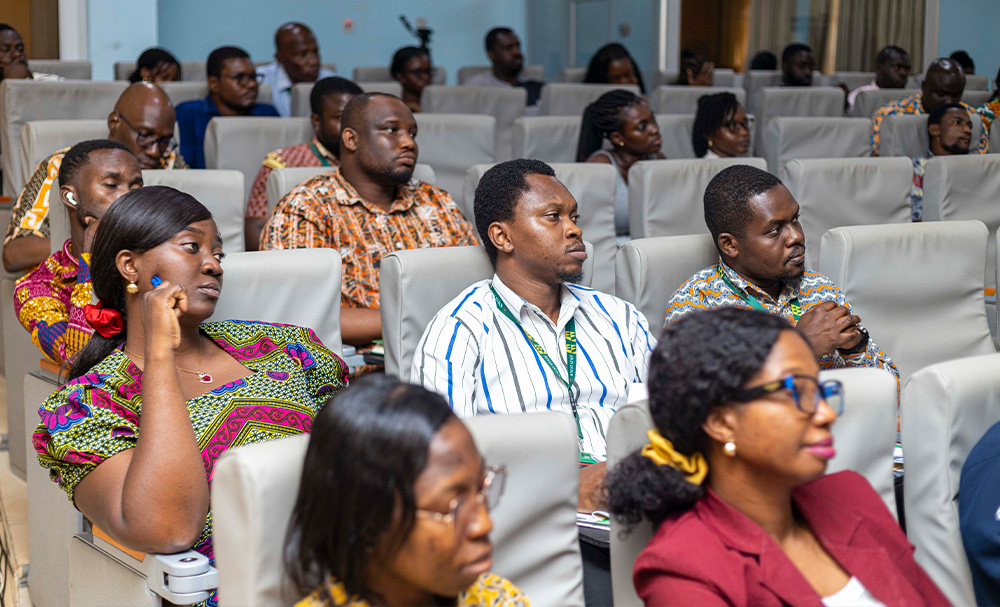
The Office of Grants and Research (OGR) at the Kwame Nkrumah University of Science and Technology, Kumasi (KNUST), in collaboration with the IREX-CTY Project, has concluded a two-day Grants Financial Management training workshop with a renewed call for stronger compliance, transparency, and shared responsibility in the administration of research funds.
The workshop brought together principal investigators, finance officers, procurement staff, and project teams to strengthen internal systems and ensure adherence to donor requirements and institutional policies.
Mr. Francis Atondiba Kantorgorje, Senior Assistant Internal Auditor, said the core objective of auditing sponsored projects is to ensure proper use of funds and compliance with applicable guidelines.
“The purpose is to verify the appropriate use of funds from sponsors,” he stated.
He explained that the Internal Audit Office, mandated under national legislation and university statutes, is responsible for identifying and mitigating risks such as waste, fraud, and abuse in project implementation.
“When you see auditors coming around asking for information, it is part of their mandate,” he said.
Mr. Kantorgorje, however, raised concerns about limited access to project documentation and management systems, noting that such constraints affect operationalisation and the verification of indirect cost rates and budget lines.
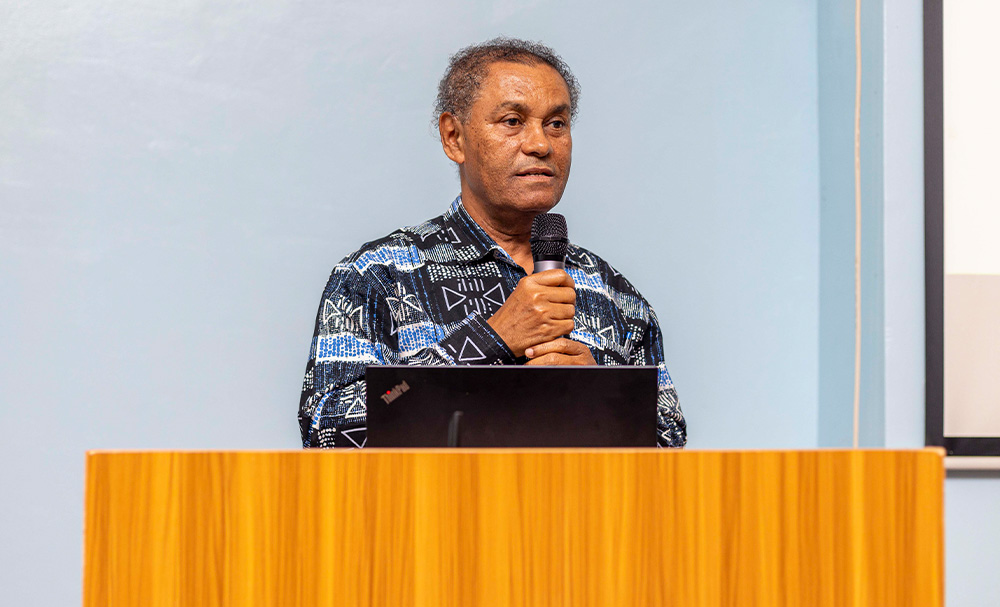
Speaking on external auditor compliance requirements, Dr. Robert Donaldy of Donaldy Associates said external audits provide independent assurance to donors and stakeholders that project funds have been properly utilised and objectives achieved.
“The person bringing money wants assurance that his money has been spent well,” he said.
Dr. Donaldy stressed that compliance is a shared responsibility between auditors and project leaders, urging stronger collaboration in documentation and reporting.

Mrs. Hannah Adom Eyison, Principal Investigator for the IREX-CTY Project and Grants and Research Manager, highlighted recurring communication gaps and documentation challenges in grant administration.
She cautioned against withholding grant information internally, warning that it complicates project setup and financial tracking.
“Before you argue, make sure that you are well-versed in the university policies, institutional policies, and funder policies,” she advised.
Mrs. Eyison also cited procurement delays as a frequent source of frustration but encouraged early planning and proactive follow-ups.
“We don’t just send a letter and leave it there. We must follow it up,” she said.
She noted that effective grant management strengthens institutional credibility and competitiveness.
“Managing grants effectively positions us as a university to attract more grants,” she added.
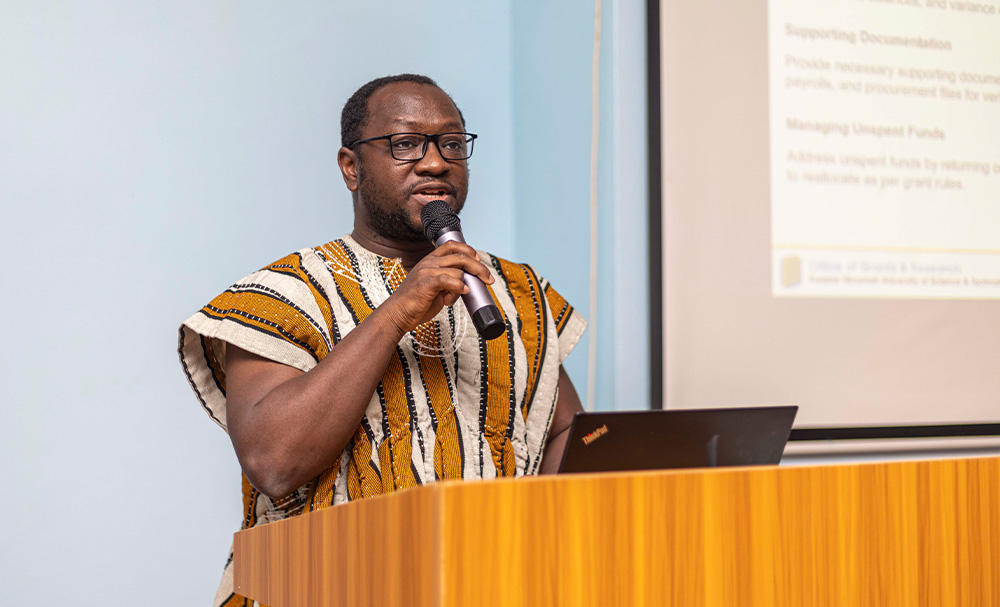
Assistant Grants and Research Manager, Mr. Bernard Barnie Asamoah, outlined the university’s grant award closeout policy, stressing that proper project closure is as critical as securing funding.
He highlighted key requirements including technical and financial reporting, account reconciliation, documentation, record retention, and responsible management of unspent funds.
“In case of any audit, you can show evidence or documents that you are ready for it,” he said, urging project teams to maintain complete records and review award terms from the onset.
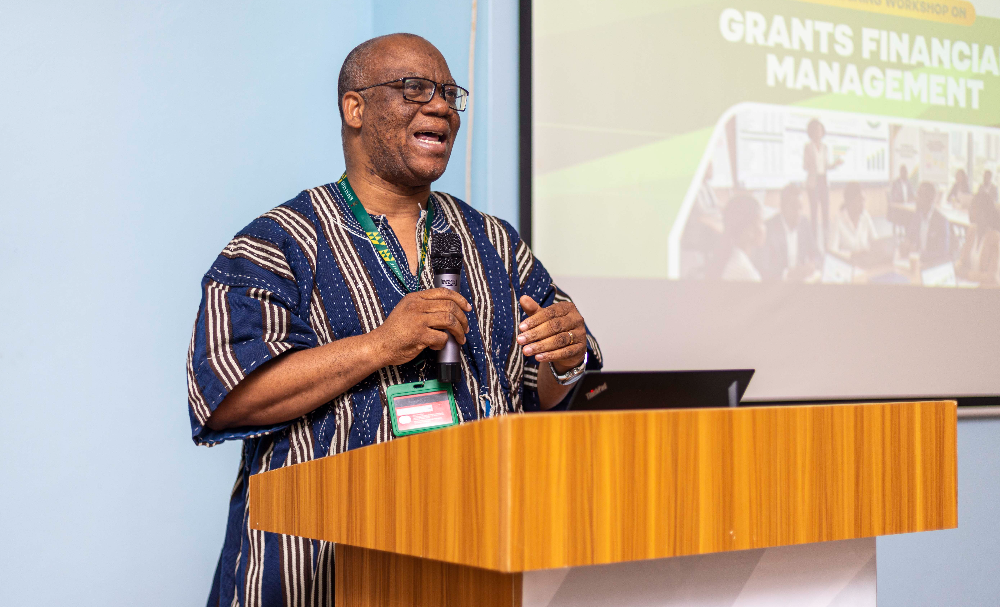
The Director of OGR, Prof. Jerry John Kponyo, called on stakeholders to take ownership of their roles and sustain collaboration beyond the workshop.
“If your plot is procurement, if your plot is finance, if your plot is PI, and if your plot is audits, you ensure that every day your plot is very, very clean,” he said.
He urged improved transparency, compliance, and collective responsibility in grants financial management across all units of the university.


